There is nothing quite like a stack of warm, fluffy homemade buttermilk pancakes for breakfast. These pancakes are soft and tender inside, lightly crisp around the edges, and filled with the rich, slightly tangy flavor that buttermilk brings to the batter. They are simple enough for a weekday breakfast but special enough for a lazy weekend brunch.
The secret to excellent buttermilk pancakes is surprisingly simple: use fresh ingredients, avoid overmixing the batter, and cook the pancakes over moderate heat. Buttermilk reacts with baking soda and baking powder to create bubbles, giving the pancakes their light and airy texture.
Ingredients
For approximately 10–12 pancakes, you will need:
- 2 cups all-purpose flour
- 2 tablespoons granulated sugar
- 2 teaspoons baking powder
- 1 teaspoon baking soda
- 1/2 teaspoon salt
- 2 large eggs
- 2 cups buttermilk
- 4 tablespoons unsalted butter, melted and slightly cooled
- 1 teaspoon vanilla extract
- Additional butter or cooking oil for the pan
For serving:
- Butter
- Maple syrup
- Fresh berries
- Sliced bananas
- Whipped cream
- Powdered sugar, optional
Preparing the Batter
Begin by gathering all your ingredients and allowing the eggs and buttermilk to come close to room temperature. Room-temperature ingredients generally combine more evenly and help the melted butter blend into the batter without becoming solid.
In a large mixing bowl, whisk together the flour, sugar, baking powder, baking soda, and salt. Mixing the dry ingredients first helps distribute the leavening agents evenly throughout the flour.
In a separate bowl, whisk the eggs until lightly beaten. Add the buttermilk, melted butter, and vanilla extract. Stir until everything is combined.
Pour the wet ingredients into the bowl containing the dry ingredients. Using a whisk or rubber spatula, gently stir until just combined.
Do not worry if the batter contains a few small lumps. In fact, slightly lumpy pancake batter is preferable to perfectly smooth batter. Overmixing develops the gluten in the flour, which can make pancakes chewy, dense, or tough instead of soft and fluffy.
If the batter appears very thick, let it sit for a minute or two. The flour will absorb some of the liquid. If necessary, add a small splash of buttermilk to loosen it slightly. The finished batter should be thick enough to pour slowly from a spoon but not so thick that it cannot spread naturally on the pan.
Let the Batter Rest
Allow the pancake batter to rest for about 5–10 minutes before cooking. This short resting period gives the flour time to hydrate and allows the leavening agents to begin working.
While the batter rests, preheat your skillet or griddle.
Heating the Pan
Place a large nonstick skillet, cast-iron skillet, or griddle over medium heat. Give it several minutes to warm evenly.
Add a small amount of butter to the cooking surface. You want enough butter to lightly coat the pan, but avoid using too much because excess butter can cause the pancake surfaces to brown unevenly.
To check whether the pan is ready, sprinkle a tiny drop of water onto it. If the water gently sizzles and evaporates, the temperature should be suitable.
If the pan is smoking or the butter is rapidly turning dark brown, reduce the heat.
Cooking the Pancakes
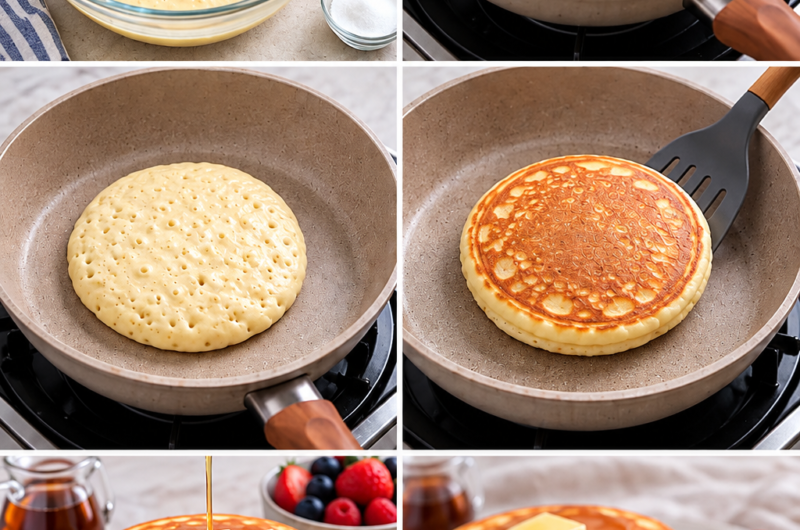
Using a measuring cup or ladle, pour approximately 1/4 cup of batter onto the hot skillet for each pancake.
Leave enough space between the pancakes so they do not touch. Depending on the size of your pan, you may be able to cook two or three pancakes at once.
Let the pancakes cook undisturbed for about 2–3 minutes. You should begin to see bubbles forming across the surface, and the edges should look slightly dry and set.
This is the perfect time to flip.
Slide a wide spatula underneath the pancake and turn it over in one confident motion. Cook the second side for another 1–2 minutes, or until golden brown and cooked through.
Avoid pressing down on the pancakes with your spatula. Although it may be tempting, pressing releases some of the air created by the leavening agents and can result in flatter pancakes.
Transfer each cooked pancake to a plate or baking sheet.
Continue cooking the remaining batter, adding a little more butter to the pan as needed.
Keeping Pancakes Warm
If you are preparing a large batch, keep the finished pancakes warm while you cook the rest.
Place them in a single layer on a baking sheet in an oven set to a low temperature, around 200°F (95°C). Avoid stacking them too high while they are hot because trapped steam can make them lose some of their delicate texture.
Serving Suggestions
The classic way to serve buttermilk pancakes is with a generous pat of butter and warm maple syrup. The butter melts into the warm pancakes while the syrup runs into all the little pockets created by the fluffy batter.
For a fresh variation, add sliced strawberries, blueberries, raspberries, or bananas.
You can also add a spoonful of whipped cream and a light dusting of powdered sugar for a brunch-style presentation.
For a more indulgent breakfast, sprinkle chocolate chips over the pancakes just after pouring the batter into the pan. Chopped pecans or walnuts can also add a wonderful crunch.
Another delicious option is to add cinnamon and finely chopped apples to the batter. Serve these pancakes with warm maple syrup for a comforting fall-inspired breakfast.
Helpful Tips for Perfect Pancakes
Do not overmix. This is one of the most important rules. Stir the batter only until the dry ingredients are moistened. A few lumps are completely fine.
Use real buttermilk when possible. Buttermilk provides the characteristic tang and acidity that help create tender pancakes. If you do not have buttermilk, you can make a substitute by adding 1 tablespoon of lemon juice or white vinegar to 1 cup of milk. Let it stand for about 5–10 minutes before using.
Do not use excessive heat. A pan that is too hot can burn the outside while leaving the center undercooked. Medium heat is usually the safest starting point.
Wait for the bubbles. Flipping too early can cause pancakes to break or cook unevenly. Look for bubbles on the surface and set edges before turning.
Do not flatten the pancakes. Allow the leavening agents to do their job and preserve the air pockets.
Grease lightly. Too much butter can make the pancakes greasy and cause inconsistent browning.
Make-Ahead and Storage
Buttermilk pancakes are excellent for making ahead. Allow leftover pancakes to cool completely, then place them in an airtight container and refrigerate for up to several days.
For longer storage, arrange cooled pancakes in a freezer-safe bag or container, placing parchment paper between them so they do not stick together. Freeze for up to a few months.
To reheat, warm them in a toaster, toaster oven, microwave, or skillet. A toaster or oven usually does the best job of restoring a slightly crisp exterior.