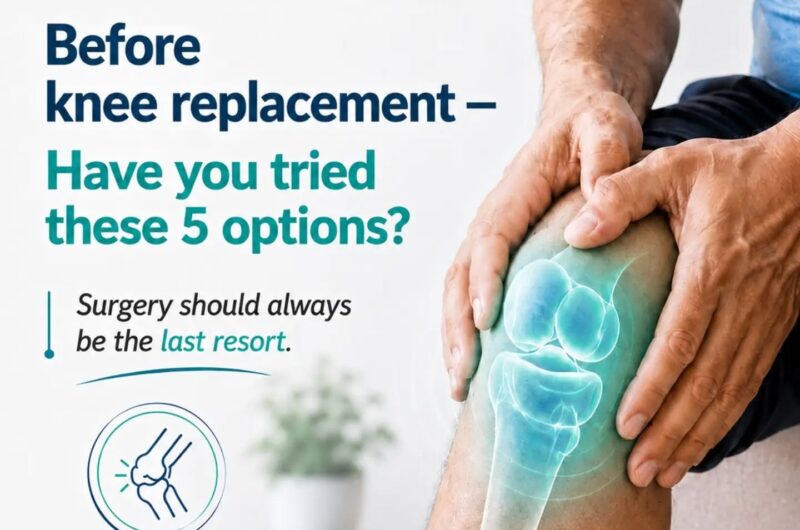
Severe knee pain can make everyday activities—walking, climbing stairs, standing up, or even sleeping—more difficult. While knee replacement or other surgical procedures may be necessary for some people, many cases of knee pain can be managed with non-surgical treatments. The most appropriate treatment depends on the underlying cause, which may include osteoarthritis, tendon injuries, ligament sprains, bursitis, or overuse. A healthcare professional can help determine the best approach after an evaluation.
Below are five evidence-based, non-surgical treatment options that may help reduce pain, improve mobility, and support knee function.
1. Physical Therapy and Targeted Exercise
Physical therapy is one of the most effective non-surgical treatments for many types of knee pain. A physical therapist designs an exercise program tailored to your condition, strength, flexibility, and goals.
Strong muscles around the knee—especially the quadriceps, hamstrings, glutes, and calves—help stabilize the joint and reduce stress on the knee during movement. Improving flexibility and balance can also reduce stiffness and lower the risk of falls.
A physical therapy program may include:
- Strengthening exercises
- Gentle stretching
- Balance and stability training
- Range-of-motion exercises
- Walking or gait training
- Guidance on proper movement patterns
Low-impact activities such as swimming, cycling, and water aerobics are often recommended because they place less stress on the knee than running or jumping.
It’s important to increase activity gradually. Exercises should be performed with proper technique, and pain that worsens significantly during or after exercise should be discussed with a healthcare provider.
2. Weight Management and Lifestyle Changes
Excess body weight increases the load on the knee joints. During walking, the force across the knee can be several times a person’s body weight, so even modest weight loss may reduce stress on the joint.
For people who are overweight or obese, gradual weight loss through a balanced diet and regular physical activity may:
- Reduce knee pain
- Improve mobility
- Decrease inflammation associated with excess body fat
- Slow progression of knee osteoarthritis
- Improve overall health
Lifestyle modifications may also include:
- Wearing supportive footwear
- Avoiding repetitive high-impact activities
- Taking regular movement breaks if sitting for long periods
- Using proper lifting techniques
- Choosing low-impact exercise
These changes often work best when combined with other treatments rather than used alone.
3. Medications and Topical Treatments
Medications may help manage symptoms, although they do not cure the underlying condition.
Depending on the cause of knee pain, a healthcare professional may recommend:
Acetaminophen
Acetaminophen may help relieve mild to moderate pain for some people, although it does not reduce inflammation.
Nonsteroidal Anti-Inflammatory Drugs (NSAIDs)
Examples include ibuprofen and naproxen. NSAIDs can reduce both pain and inflammation but may not be appropriate for everyone, particularly people with certain stomach, kidney, heart, or bleeding conditions.
Topical NSAIDs
Creams or gels containing NSAIDs can be applied directly to the knee. These may provide pain relief with less systemic absorption than oral medications, making them a useful option for some individuals.
Topical Pain Relievers
Products containing menthol or capsaicin may provide temporary relief for certain people.
Because medications can have side effects or interact with other medicines, they should be used according to the directions on the label or as advised by a healthcare professional.
4. Knee Braces, Supports, and Assistive Devices
Supportive devices can improve comfort and reduce strain on the knee.
Depending on the specific condition, options may include:
- Compression sleeves
- Hinged knee braces
- Unloading braces for some forms of knee osteoarthritis
- Shoe inserts (orthotics)
- Walking canes
- Walking poles
A properly fitted brace may improve stability and help reduce discomfort during daily activities.
If using a cane, it is generally recommended to hold it in the hand opposite the painful knee. A physical therapist or healthcare professional can demonstrate the correct technique.
Supportive devices are most effective when combined with exercise and other treatments rather than used as the only solution.
5. Injections for Selected Patients
For some individuals whose symptoms persist despite conservative treatment, injections may provide temporary relief.
Common injection options include:
Corticosteroid Injections
These injections can reduce inflammation and relieve pain for weeks or months in some people. They are commonly used for inflammatory flare-ups but are generally not recommended as frequent, long-term treatment due to potential side effects.
Hyaluronic Acid Injections
These injections aim to improve joint lubrication. Some people with knee osteoarthritis report symptom relief, although research findings on effectiveness are mixed, and benefits vary from person to person.
A healthcare professional can discuss whether injections are appropriate based on your diagnosis, overall health, and treatment goals.
Additional Self-Care Strategies
Alongside the treatments above, several self-care measures may help manage knee pain:
- Apply ice for 15–20 minutes after activity if swelling is present.
- Use heat before activity to help loosen stiff muscles and joints (unless the knee is acutely swollen).
- Stay physically active within your comfort level.
- Avoid prolonged bed rest, which can weaken muscles.
- Warm up before exercise and cool down afterward.
- Maintain good posture and body mechanics during daily activities.
When Surgery May Be Considered
Although many people improve with non-surgical treatment, surgery may become an option if:
- Pain remains severe despite appropriate conservative treatment.
- Daily activities are significantly limited.
- There is advanced joint damage.
- The knee is unstable due to significant ligament injury.
- Certain fractures or mechanical problems are present.
An orthopedic specialist can help determine whether surgical treatment is appropriate after evaluating your symptoms, imaging, and overall health.
When to Seek Medical Attention Promptly
You should seek prompt medical evaluation if knee pain is accompanied by:
- Severe swelling
- Inability to bear weight
- A visibly deformed joint
- Fever with a swollen, painful knee
- Significant redness and warmth
- Sudden locking of the knee
- Severe pain following a major injury
These symptoms may indicate a serious condition that requires urgent assessment.
Supporting Long-Term Knee Health
Protecting your knees involves consistent healthy habits. Consider:
- Maintaining a healthy body weight
- Exercising regularly with low-impact activities
- Strengthening the muscles around the knees and hips
- Wearing appropriate footwear
- Avoiding sudden increases in exercise intensity
- Taking breaks from repetitive kneeling or squatting
- Following your healthcare provider’s recommendations for ongoing care