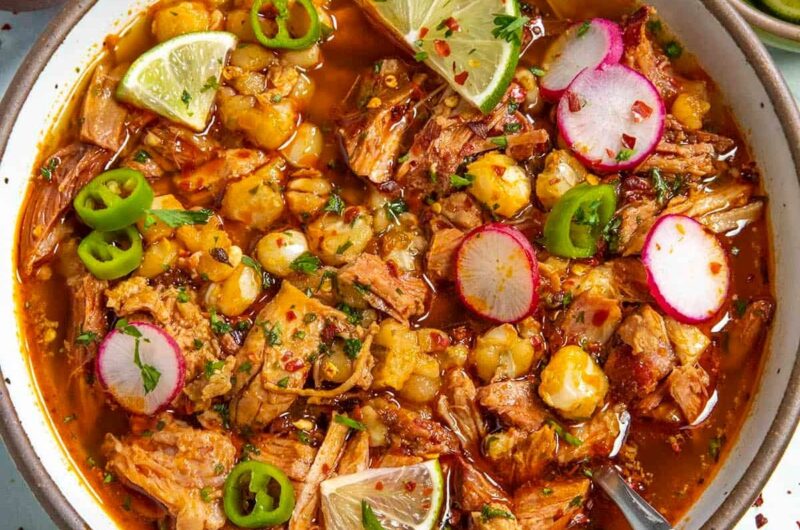
Easy Red Pozole is a hearty Mexican soup made with tender pork, hominy, and a rich red chile broth. Traditionally enjoyed as a comforting family meal and often served for celebrations, pozole is especially delicious when topped with fresh cabbage, radishes, onion, lime, and cilantro.
This simplified version keeps the classic flavors while making the cooking process more approachable. The pork is simmered until tender, while dried red chiles are blended with garlic, onion, and spices to create a flavorful sauce. Hominy is added toward the end so it stays plump and pleasantly chewy.
The best part of pozole is the toppings. Set everything out on the table and let everyone customize their bowl with their favorite fresh garnishes.
Ingredients
For the Pozole
- 2 1/2 pounds boneless pork shoulder, cut into 1 1/2-inch pieces
- 2 tablespoons vegetable oil
- 1 medium white onion, quartered
- 5 cloves garlic, peeled
- 2 bay leaves
- 1 teaspoon salt, plus more to taste
- 8 cups chicken broth or water
- 2 cans (25 ounces each) white hominy, drained and rinsed
- 1 teaspoon dried Mexican oregano
- 1/2 teaspoon ground cumin
For the Red Chile Sauce
- 6 dried guajillo chiles
- 3 dried ancho chiles
- 2 cloves garlic
- 1/4 white onion
- 1 teaspoon dried Mexican oregano
- 1/2 teaspoon ground cumin
- 1 cup hot water or cooking broth
- 1/2 teaspoon salt, or to taste
For Serving
- Thinly sliced green or white cabbage
- Thinly sliced radishes
- Finely chopped white onion
- Fresh cilantro
- Lime wedges
- Dried oregano
- Sliced avocado
- Chopped jalapeños
- Tortilla chips or warm corn tortillas
Instructions
1. Prepare the Pork
Pat the pork shoulder dry with paper towels and cut it into evenly sized pieces.
Heat the vegetable oil in a large Dutch oven or heavy-bottomed pot over medium-high heat.
Working in batches if necessary, add the pork and brown it on several sides. This should take approximately 6–8 minutes per batch.
You don’t need to cook the pork through at this stage. Browning simply develops a deeper, richer flavor.
Transfer the browned pork to a plate.
2. Start the Broth
Return the pot to medium heat.
Add the quartered onion, garlic cloves, bay leaves, salt, and chicken broth.
Return the browned pork to the pot and bring the liquid to a gentle boil.
Reduce the heat to low, cover partially, and simmer for approximately 1 1/2 to 2 hours, or until the pork is very tender and easily pulls apart with a fork.
Skim off excess foam or fat from the surface occasionally if needed.
3. Prepare the Red Chile Sauce
While the pork is cooking, prepare the chile sauce.
Remove the stems and seeds from the guajillo and ancho chiles.
Place the dried chiles in a bowl and cover them with very hot water. Let them soak for approximately 15–20 minutes, until softened.
Drain the chiles and transfer them to a blender.
Add the garlic, onion, oregano, cumin, salt, and 1 cup of hot water or cooking broth.
Blend until completely smooth.
For an extra-smooth pozole, pour the blended sauce through a fine-mesh strainer. Press the mixture with a spoon to extract as much liquid as possible and discard the remaining solids.
4. Add the Red Chile Sauce
Once the pork is tender, remove the onion, garlic cloves, and bay leaves from the pot.
Pour the strained red chile sauce into the pork broth.
Stir thoroughly to combine.
The broth should develop a beautiful deep red color. Taste and adjust the salt as necessary.
Let the pozole simmer gently for another 20–30 minutes. This gives the chile sauce time to blend into the broth and flavor the pork.
5. Add the Hominy
Drain and rinse the canned hominy thoroughly.
Add it to the pot along with the dried Mexican oregano and cumin.
Stir gently and continue simmering for approximately 15–20 minutes, until the hominy is hot and has absorbed some of the flavorful red broth.
If the soup becomes too thick, add additional chicken broth or water.
Taste again and adjust the seasoning.
6. Prepare the Toppings
While the pozole finishes cooking, prepare the toppings.
Thinly slice the cabbage and radishes. Chop the white onion and cilantro. Cut several limes into wedges.
Arrange the toppings on individual plates or in small bowls so everyone can build their own pozole.
For extra heat, serve sliced jalapeños or your favorite Mexican hot sauce on the side.
7. Serve
Ladle the hot pozole into large bowls, making sure each serving contains plenty of tender pork and hominy.
Top generously with shredded cabbage, radishes, chopped onion, cilantro, and a sprinkle of dried oregano.
Finish with a generous squeeze of fresh lime juice.
Serve immediately with warm corn tortillas or crispy tortilla chips.
Tips for the Best Red Pozole
Use pork shoulder: Pork shoulder contains enough fat and connective tissue to become exceptionally tender during slow cooking.
Toast the chiles: For an even deeper flavor, lightly toast the dried chiles in a dry skillet for a few seconds per side before soaking. Be careful not to burn them because burnt chiles can taste bitter.
Strain the sauce: Straining isn’t essential, but it creates a smoother, more refined broth.
Adjust the spice: Guajillo and ancho chiles provide rich chile flavor without making the pozole extremely spicy. Add árbol chiles or jalapeños if you prefer more heat.
Don’t skip the toppings: The fresh cabbage, radishes, onion, cilantro, and lime provide a crisp, bright contrast to the rich broth.
Storage and Reheating
Pozole is excellent for making ahead because the flavors become even better after resting.
Allow leftovers to cool before transferring them to airtight containers. Refrigerate for up to 4 days.
Reheat gently on the stovetop over medium-low heat until steaming hot. Add a splash of broth or water if necessary.
Pozole can also be frozen for up to 3 months. For the best texture, freeze the soup without the fresh toppings and prepare those separately when serving.