There is something wonderfully comforting about a stack of warm, fluffy pancakes served fresh from the skillet. This classic pancake recipe uses simple pantry ingredients and produces soft, tender pancakes with lightly golden edges. They are perfect for breakfast, brunch, weekend gatherings, or whenever you want an easy homemade treat.
The pancakes can be served traditionally with butter and maple syrup, or customized with fresh fruit, chocolate chips, nuts, cinnamon, or other favorite toppings. The key to fluffy pancakes is mixing the batter gently and cooking it over moderate heat.
Ingredients
For the Pancakes
- 2 cups all-purpose flour
- 2 tablespoons granulated sugar
- 2 teaspoons baking powder
- ½ teaspoon baking soda
- ½ teaspoon salt
- 1¾ cups buttermilk
- 2 large eggs
- 4 tablespoons unsalted butter, melted and slightly cooled
- 1 teaspoon vanilla extract
- Butter or neutral oil, for cooking
For Serving
- Butter
- Maple syrup
- Fresh strawberries, blueberries, or bananas
- Powdered sugar, optional
- Whipped cream, optional
- Chopped nuts, optional
Instructions
1. Prepare the Dry Ingredients
Start by adding the flour, sugar, baking powder, baking soda, and salt to a large mixing bowl.
Whisk everything together until the ingredients are evenly distributed. This step is important because it prevents pockets of baking powder or baking soda from remaining in the finished pancakes.
Do not overwork the mixture. A few seconds of gentle whisking is enough.
2. Mix the Wet Ingredients
In a separate bowl, whisk together the buttermilk, eggs, melted butter, and vanilla extract.
Make sure the melted butter has cooled slightly before adding it to the eggs. Very hot butter can partially cook the eggs.
If you do not have buttermilk, you can make a simple substitute. Add 1 tablespoon of lemon juice or white vinegar to a measuring cup, then add enough milk to reach 1¾ cups. Let it stand for about 5–10 minutes before using.
3. Combine the Batter
Make a well in the center of the dry ingredients.
Pour the wet mixture into the center and gently stir with a whisk or wooden spoon.
This is one of the most important steps in making fluffy pancakes: do not overmix the batter.
The batter should be slightly lumpy. Overmixing develops the gluten in the flour and can result in pancakes that are dense, chewy, or tough instead of soft and fluffy.
Stop stirring as soon as you no longer see large areas of dry flour.
If you want to add chocolate chips, blueberries, or chopped nuts, gently fold them in at this stage.
4. Let the Batter Rest
Allow the pancake batter to rest for approximately 5–10 minutes.
During this short resting period, the flour hydrates and the leavening ingredients begin working. This can help produce a lighter texture.
While the batter rests, heat your skillet or griddle.
5. Heat the Pan
Place a large nonstick skillet or griddle over medium heat.
Allow it to warm for a few minutes. Add a small amount of butter or neutral cooking oil and spread it across the surface.
The pan should be hot enough that a drop of batter begins to sizzle gently when it touches the surface, but it should not immediately burn or turn dark.
If the pan is too hot, the outside of the pancakes may brown before the center cooks. If it is too cool, the pancakes may absorb excess butter and become pale.
Medium heat is usually the best starting point.
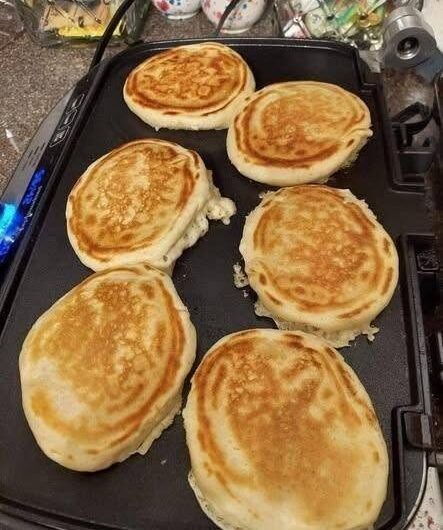
6. Cook the Pancakes
Use a measuring cup or ladle to pour approximately ¼ cup of batter onto the hot skillet for each pancake.
Leave enough space between pancakes so they do not run together.
Cook the pancakes for about 2–3 minutes on the first side.
You will know they are ready to flip when bubbles begin appearing across the surface and the edges look slightly set.
Carefully slide a spatula underneath the pancake and flip it in one confident motion.
Cook the second side for another 1–2 minutes, or until golden brown and cooked through.
Transfer the finished pancake to a plate.
Continue cooking the remaining batter, adding a small amount of butter or oil to the pan as needed.
How to Keep Pancakes Warm
If you are making a large batch, you can keep the cooked pancakes warm while finishing the rest.
Place them in a single layer on an oven-safe plate or baking sheet and keep them in an oven set to approximately 200°F (95°C).
Avoid stacking too many pancakes while they are still very hot because trapped steam can make them slightly soggy.
Tips for Extra-Fluffy Pancakes
Don’t Overmix
The most common mistake is stirring the batter too much. A slightly lumpy batter is perfectly acceptable and often produces better pancakes.
Measure Flour Correctly
Too much flour can make the pancakes heavy. For the most accurate measurement, use a kitchen scale. If measuring with cups, spoon the flour into the measuring cup and level the top rather than packing the flour down.
Use Fresh Leavening Ingredients
Baking powder and baking soda lose effectiveness over time. Fresh ingredients help the pancakes rise properly.
Don’t Flatten the Pancakes
Once you pour the batter into the pan, resist the temptation to press down on the pancakes with your spatula. Doing so can push out the air and make them flatter.
Maintain Moderate Heat
If the pancakes are becoming dark before bubbles form on the surface, reduce the heat. Pancakes generally cook best when given enough time to cook through without burning.
Delicious Variations
Blueberry Pancakes
Add 1 cup of fresh or frozen blueberries to the batter. Fold them in gently to avoid crushing them.
Chocolate Chip Pancakes
Add ½–¾ cup of chocolate chips. Serve with sliced bananas and a drizzle of maple syrup.
Cinnamon Pancakes
Add 1 teaspoon of ground cinnamon to the dry ingredients. You can also add a small pinch of nutmeg for extra warmth.
Banana Pancakes
Mash one ripe banana and gently fold it into the prepared batter. Because bananas add moisture and sweetness, you may want to reduce the sugar slightly.
Lemon Blueberry Pancakes
Add 1 teaspoon of finely grated lemon zest and 1 cup of blueberries. The combination creates a bright, fruity breakfast.
Nutty Pancakes
Fold in chopped walnuts or pecans. Serve with maple syrup and banana slices.
Serving Ideas
Classic pancakes are delicious with butter and warm maple syrup, but there are many other ways to serve them.
Try topping them with fresh strawberries, blueberries, raspberries, sliced bananas, yogurt, or whipped cream.
For a more indulgent breakfast, add peanut butter, chocolate sauce, or a light dusting of powdered sugar.
You can also serve pancakes with scrambled eggs, turkey sausage, fresh fruit, or yogurt for a more complete breakfast.
Storing Leftover Pancakes
Allow leftover pancakes to cool completely before storing them.
Place parchment paper between individual pancakes and store them in an airtight container in the refrigerator for up to several days.
For longer storage, freeze the pancakes in a freezer-safe bag or container. Separating them with parchment paper makes it easier to remove individual pancakes later.
Frozen pancakes can be reheated in a toaster, toaster oven, microwave, or skillet.
For the microwave, place one or two pancakes on a microwave-safe plate and heat briefly until warmed through.
Frequently Asked Questions
Why are my pancakes not fluffy?
Several factors can cause flat pancakes, including overmixing, old baking powder, excessive liquid, or a pan that is not heated properly.
Can I use regular milk instead of buttermilk?
Yes. Regular milk works, although buttermilk gives the pancakes a pleasant tang and can contribute to a tender texture. You can also make a quick buttermilk substitute using milk and lemon juice or vinegar.
Why do my pancakes burn?
Your skillet is probably too hot. Reduce the heat to medium or medium-low and allow the pancakes more time to cook.
Can I make the batter ahead of time?
Pancake batter is best used relatively soon after mixing because the leavening ingredients become less effective over time. For convenience, prepare the dry and wet ingredients separately and combine them shortly before cooking.