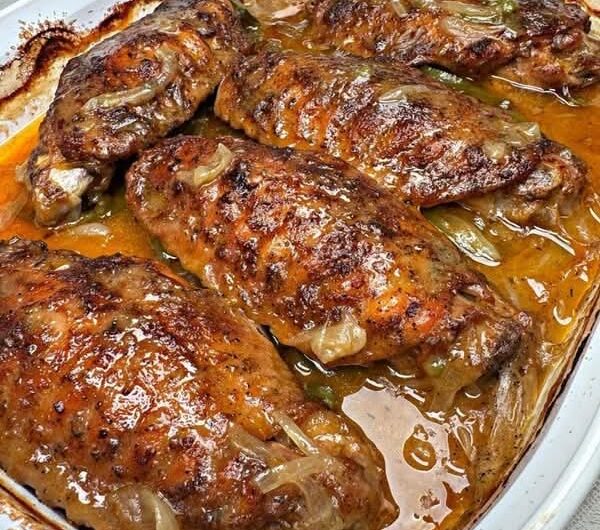
Smothered Turkey Wings with Gravy are the ultimate comfort-food dinner: tender, juicy turkey wings slowly baked in a savory onion gravy until the meat practically falls from the bone. The turkey is seasoned generously, browned for extra flavor, then covered with a rich homemade gravy and baked until beautifully tender. Serve these wings over mashed potatoes, rice, or creamy macaroni and cheese for a satisfying family meal.
Ingredients
For the Turkey Wings
- 3–4 pounds turkey wings, split into sections
- 2 tablespoons olive oil
- 2 teaspoons seasoned salt
- 1 teaspoon garlic powder
- 1 teaspoon onion powder
- 1 teaspoon smoked paprika
- 1 teaspoon dried thyme
- ½ teaspoon black pepper
- ½ teaspoon poultry seasoning
- ½ teaspoon dried oregano
For the Gravy
- 2 tablespoons butter
- 1 large yellow onion, thinly sliced
- 2 cloves garlic, minced
- 3 tablespoons all-purpose flour
- 3 cups chicken or turkey broth
- ½ cup heavy cream
- 1 teaspoon Worcestershire sauce
- ½ teaspoon dried thyme
- ½ teaspoon onion powder
- Salt and black pepper, to taste
Optional
- 1 teaspoon browning sauce
- Fresh parsley, for garnish
Step 1: Prepare the Turkey Wings
Preheat your oven to 350°F (175°C).
Pat the turkey wings thoroughly dry with paper towels. Removing excess moisture helps the seasoning stick and allows the wings to brown properly.
Place the turkey wings in a large bowl. Drizzle with olive oil, then sprinkle with seasoned salt, garlic powder, onion powder, smoked paprika, thyme, black pepper, and poultry seasoning.
Rub the seasonings thoroughly over every piece of turkey, making sure all sides are coated.
For even more flavor, let the seasoned turkey rest for 15–20 minutes while you prepare the skillet.
Step 2: Brown the Turkey
Heat a large oven-safe skillet, Dutch oven, or heavy roasting pan over medium-high heat.
Add a small amount of oil if necessary. Place the turkey wings into the hot pan, working in batches if needed. Brown them for approximately 3–5 minutes per side.
You aren’t trying to cook the turkey completely at this point. The purpose of browning is to develop a flavorful crust and leave behind browned bits in the pan that will enrich the gravy.
Once browned, transfer the turkey wings to a plate.
Step 3: Cook the Onions
Reduce the heat to medium and add the butter to the same skillet.
Add the sliced onion and cook for approximately 5–7 minutes, stirring occasionally. The onions should soften and begin turning golden.
Add the minced garlic and cook for another 30–60 seconds, just until fragrant.
Be careful not to burn the garlic.
Step 4: Make the Gravy
Sprinkle the flour over the onions and butter. Stir continuously for about 1–2 minutes.
Cooking the flour briefly removes its raw taste and creates the foundation for a smooth gravy.
Slowly pour in the chicken or turkey broth while whisking constantly. Adding the broth gradually helps prevent lumps.
Once all the broth has been incorporated, stir in the heavy cream, Worcestershire sauce, thyme, and onion powder.
If you’re using browning sauce, add a small amount for a deeper color.
Bring the gravy to a gentle simmer. Taste it and add salt and black pepper as needed.
The gravy doesn’t need to be extremely thick at this point. It will continue to thicken as it cooks in the oven.
Step 5: Smother the Turkey Wings
Return the browned turkey wings to the skillet, arranging them in a single layer as much as possible.
Spoon some of the gravy and onions over the top of the wings.
Cover the skillet tightly with a lid or aluminum foil.
Place the skillet in the preheated oven and bake for approximately 1½–2 hours, or until the turkey is very tender.
Turkey wings benefit from slow cooking because they contain connective tissue that needs time to break down. Don’t rush this step.
After about 1½ hours, carefully check the turkey. The meat should be tender and easy to pull away from the bone.
For an especially tender result, continue baking until the wings reach the texture you prefer. Always ensure poultry reaches a safe internal temperature of at least 165°F (74°C).
Step 6: Finish the Gravy
Once the turkey is tender, carefully remove the skillet from the oven.
Transfer the turkey wings to a serving platter and loosely cover them with foil.
Stir the gravy in the skillet. If it seems too thin, place the skillet over medium heat on the stovetop and simmer uncovered for several minutes until it reaches your desired consistency.
If the gravy becomes too thick, add a small splash of broth and stir.
Taste once more and adjust the seasoning.
Return the turkey wings to the gravy or spoon the gravy generously over them before serving.
Tips for the Best Turkey Wings
Don’t skip browning. Browning creates a deeper, richer flavor and gives the finished dish a more appealing color.
Use plenty of seasoning. Turkey wings are substantial pieces of meat, so seasoning the meat generously is important.
Slice the onions thinly. Thin onions soften beautifully and become part of the rich gravy.
Keep the pan covered. Covering the turkey helps trap steam and moisture, allowing the wings to become exceptionally tender.
Don’t rush the cooking time. Turkey wings can be tough if undercooked. Slow baking allows the connective tissue to soften.
Taste the gravy before serving. Broth and seasoned salt vary in saltiness, so adjust the seasoning at the end.
Serving Suggestions
Smothered turkey wings are especially delicious served over creamy mashed potatoes. The potatoes soak up the savory gravy and make every bite satisfying.
White rice, brown rice, buttered noodles, macaroni and cheese, or fluffy biscuits are also excellent choices.
For vegetables, serve the turkey with collard greens, green beans, roasted carrots, cabbage, corn, or steamed broccoli.
A simple side salad can also add freshness to the meal.
Storage and Reheating
Allow leftover turkey wings and gravy to cool before transferring them to an airtight container. Refrigerate for up to 3–4 days.
To reheat, place the turkey and gravy in a covered skillet over low to medium heat. Add a splash of broth if the gravy has thickened too much.
You can also reheat individual portions in the microwave, covering them loosely to retain moisture.
For longer storage, turkey wings and gravy can be frozen in a freezer-safe container. Thaw overnight in the refrigerator before reheating.